Buying a historic stone home in Buckingham can feel exciting and a little intimidating at the same time. You may be drawn to the thick stone walls, old-world character, and sense of permanence, but you also want to know what you are really taking on. This guide will help you understand how these homes were built, what to inspect first, and how local review rules can affect your plans. Let’s dive in.
Why Buckingham stone homes stand out
Buckingham’s historic stone houses are part of what gives the township its distinct identity. Township history materials note that many of these old stone houses and barns reflect both English and German architectural traditions, and the township’s Historic Commission helps protect buildings tied to that heritage.
For you as a buyer, that matters in a practical way. A historic stone home in Buckingham is often more than a place to live. It is also a property that may come with preservation responsibilities, local review considerations, and long-term maintenance needs that differ from a newer home.
The township’s comprehensive plan connects historic preservation with stewardship and property value. Its zoning ordinance also creates a review framework for identified historic resources. In other words, charm and responsibility often go hand in hand.
What historic stone homes look like
Many older stone homes in this part of Pennsylvania began as modest, practical structures. Research on early Pennsylvania German houses shows that homes were often built in log or stone, with steep roofs, thick walls, small irregular windows, and simple layouts organized around a chimney.
Over time, many Bucks County stone houses evolved. Historic records show examples that expanded into center-hall plans, added kitchen wings, or were built in more than one section. That means the house you tour today may reflect decades, or even generations, of additions and changes.
Common layout clues
Historic stone homes in Buckingham often reveal their age through their floor plans. You may see one-room-deep center-hall designs, two-pile center-hall layouts, or a main block with a later rear wing.
This phased construction is common in the region. Some homes were enlarged as families grew or as household needs changed, so it is not unusual to find rooms that sit at slightly different floor levels, wall thicknesses, or ceiling heights.
Exterior details to notice
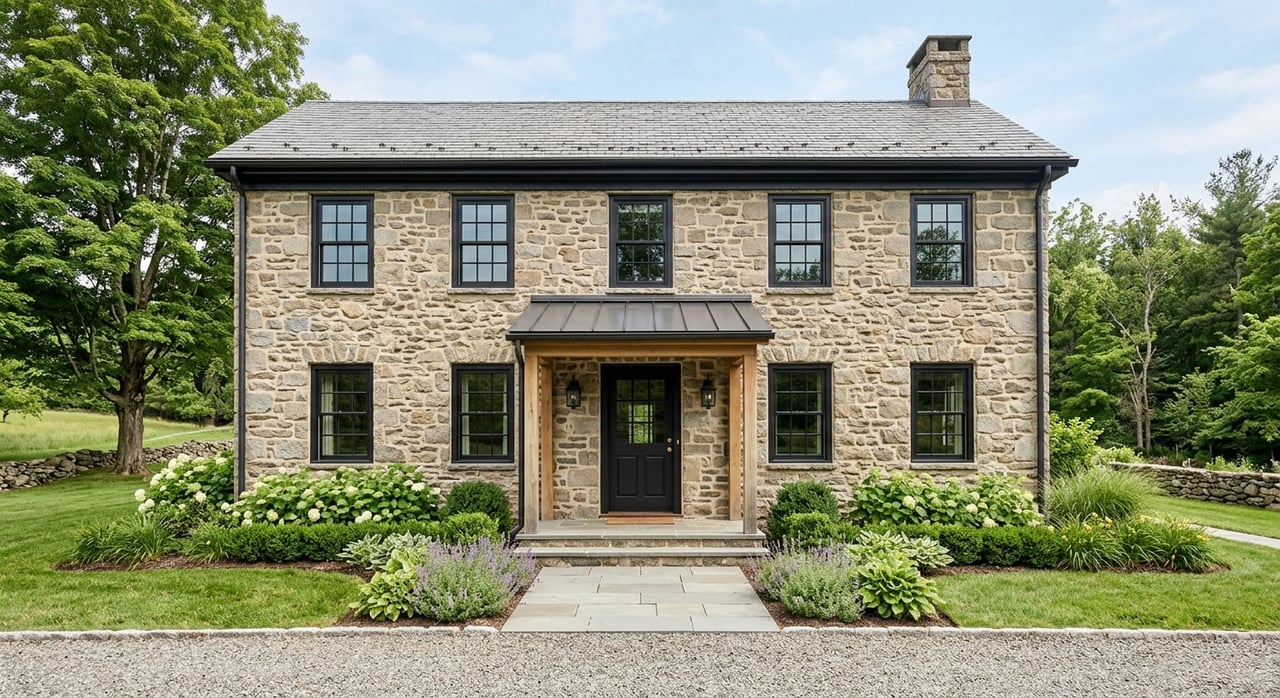
A quick exterior walkaround can tell you a lot. Common clues include fieldstone or random fieldstone walls, slate roofs, recessed doorways, multi-light sash, overhanging eaves, and additions that sit a little differently from the original block.
Those features are part of the appeal, but they can also signal where careful inspection is needed. Any point where old and newer sections meet deserves close attention because transitions can be vulnerable to moisture and movement.
What to inspect first
With a historic house, cosmetics should come later. Before you think about paint colors or kitchen finishes, focus on the building fabric and the systems that protect it.
A strong inspection process should start with the roof, chimney, walls, foundation, windows, attic, basement, porches, fireplaces, doors, and any signs of moisture. The goal is to understand how the house sheds water, handles air flow, and supports its masonry.
Roof and chimney
Roof and chimney issues can create some of the biggest repair costs in an older stone house. Look for sagging rooflines, leaning chimneys, loose or missing mortar, clogged gutters, broken downspouts, and signs that roof ventilation may be inadequate.
Even small roof leaks can lead to bigger problems. Once water gets in, it can damage masonry, wood framing, plaster, paint, and other structural elements.
Masonry and mortar
Not all masonry repairs are equal. When you buy a stone home, it is smart to ask what kind of mortar was used in past repairs and whether it matches the original mortar in strength, composition, color, texture, and joint profile.
This matters because overly hard or impermeable mortar can damage historic stone over time. Aggressive cleaning can also harm the surface of the masonry, so a clean-looking wall is not always a sign of a good repair.
Drainage and moisture
If you remember one thing, let it be this: moisture control is essential in a historic stone home. Check grading around the home, downspout extensions, basement dampness, irrigation placement, efflorescence, and any signs of rising damp.
Preservation guidance recommends moving runoff away from the foundation first. Broken or clogged downspouts can saturate foundation walls and damage nearby wood, so drainage fixes are often one of the most important early investments.
Windows and doors
Historic windows deserve careful evaluation before replacement is discussed. In many cases, repair, weatherstripping, and storm windows can improve performance while preserving the home’s original character.
If replacement has already happened, look closely at whether the newer windows fit the house visually. Visible replacements should closely match the historic appearance of the originals.
Mechanical systems
Older homes can hide moisture problems inside newer systems. Inspect plumbing lines, ducts, HVAC equipment, condensate pans, and any areas where pipes or ducts pass through walls, ceilings, or basement spaces.
Leaks and condensation can quietly damage plaster, wood, and masonry. In a stone house, hidden moisture is often more important than a dated finish.
Smart upgrades for comfort
Most buyers want a historic home to feel comfortable year-round. That is reasonable, but upgrades should be planned carefully so the house can still manage moisture properly.
Air sealing and insulation in attics and basements or around foundations can often help. But insulation added to the interior side of solid masonry walls can slow drying and increase freeze-thaw risk, so a moisture-focused assessment is important before making that kind of change.
Best places to start
If you are thinking about modernization, focus first on work that protects the structure and improves daily performance without trapping moisture.
A practical order often looks like this:
- Fix roof leaks and chimney issues.
- Improve gutters, downspouts, and grading.
- Address masonry problems with compatible repairs.
- Evaluate windows for repair and weatherstripping.
- Check HVAC, plumbing, and hidden moisture sources.
- Plan insulation and air sealing only after understanding moisture movement.
This approach helps you avoid expensive mistakes. It also supports the long-term health of the stone, mortar, wood, and plaster that give the home its character.
Buckingham approval issues to check
Before you close, verify whether the property appears on Buckingham Township’s official historic resources list or sits within a historic village overlay. This step can affect what you may be able to change later.
The zoning ordinance says identified resources must be preserved unless they cannot be adapted. It also requires Historic Commission and Board review, plus additional documentation, for demolition-related applications.
That does not mean you cannot improve the property. It does mean you should understand the review process early, especially if you are considering major exterior work, removal of historic features, or significant structural changes.
How the market affects your decision
Buckingham’s market adds another layer to the buying process. As of March 2026, local market data showed Buckingham as a seller’s market, with a median listing price of $1.3125 million, 26 days on market, 54 homes for sale, and a 98% sale-to-list ratio.
County-level numbers tell a somewhat broader story. Redfin reported Bucks County’s March 2026 median sale price at $510,000 with an average of 34 days on market, while BCAR reported a July 2025 county median sold price of $515,000 with an average of 18 days on market.
For you, the takeaway is simple. Historic stone homes in Buckingham often sit in a higher-end segment where condition, maintenance history, and presentation can strongly influence buyer confidence and pricing.
How to evaluate a good purchase
The best historic stone-home purchases are usually not the ones that simply photograph well. They are the ones with a clear record of maintenance, compatible repairs, and water management systems that still let the house breathe.
When you compare properties, pay close attention to these questions:
- Has the roof been maintained properly?
- Do gutters and downspouts move water well away from the foundation?
- Has the masonry been repointed with compatible mortar?
- Are additions integrated well, or do they show signs of movement or moisture?
- Have windows been repaired thoughtfully or replaced in a way that fits the home?
- Are there damp basement conditions or signs of trapped moisture?
- Is the property subject to historic review rules?
A stone home can be an exceptional long-term purchase when its essential systems have been respected. In many cases, careful stewardship matters more than flashy renovations.
Why local guidance matters
Buying a historic property is rarely a simple yes-or-no decision. You are balancing architecture, maintenance, local review rules, and market timing all at once.
That is where local guidance becomes valuable. In a market like Buckingham, you want clear insight into condition, presentation, and how a home fits into the township’s historic context before you make a move.
If you are considering a historic stone home in Buckingham and want practical guidance on value, condition, and what to look for before you buy, connect with Nick Esser for thoughtful local advice.
FAQs
What makes a Buckingham historic stone home different from a newer home?
- A Buckingham historic stone home often includes thick masonry walls, older layouts, phased additions, and preservation-related maintenance needs that differ from a typical newer property.
What should buyers inspect first in a Buckingham stone house?
- Buyers should start with the roof, chimney, masonry, drainage, basement moisture, windows, foundation, attic, and mechanical systems before focusing on cosmetic updates.
What masonry issue matters most in a historic Buckingham home?
- One of the most important issues is whether past repointing used mortar compatible with the original stone and mortar, since overly hard repairs can damage the masonry.
What should buyers know about moisture in Buckingham stone homes?
- Moisture control is critical, so you should check grading, gutters, downspouts, basement dampness, efflorescence, irrigation placement, and any signs that water is not moving away from the foundation.
What local approval rules can affect a Buckingham historic home purchase?
- If a property is on the township’s historic resources list or within a historic village overlay, certain changes may require Historic Commission and Board review, especially for demolition-related work.
Is Buckingham a competitive market for historic stone homes?
- Yes. Research cited Buckingham as a seller’s market in March 2026, and that means condition, maintenance history, and presentation can play a major role in both buyer confidence and pricing.