Wondering if a condo or townhome in Doylestown is the right fit for your next move? If you want less exterior upkeep, a more walkable lifestyle, or a home base close to downtown amenities, attached living can be a smart option. The key is knowing how Doylestown’s condo and townhome choices really work, from fees and rules to lifestyle tradeoffs and pricing. Let’s dive in.
Why attached living stands out
Doylestown Borough describes itself as a downtown-centered community with restaurants, museums, theater, nightlife, county-owned parking garages, and access to Route 611, US 202, and public transportation. For many buyers, that makes condo and townhome living especially appealing because you can stay close to daily conveniences without taking on as much exterior maintenance.
Doylestown Township adds even more public amenities to the mix. The Community Recreation Center on Wells Road and Central Park offer trails, courts, playground features, an amphitheater, and other public spaces. If you are moving from a larger property, these nearby amenities can help balance the smaller footprint that often comes with attached housing.
What condo and townhome options look like
Doylestown’s attached-home market is not one-size-fits-all. Some communities offer smaller condo units near the borough core, while others provide larger townhome-style layouts with garages, patios, and shared amenities. Your experience can vary a lot based on location, age, and association structure.
Chestnut Grove overview
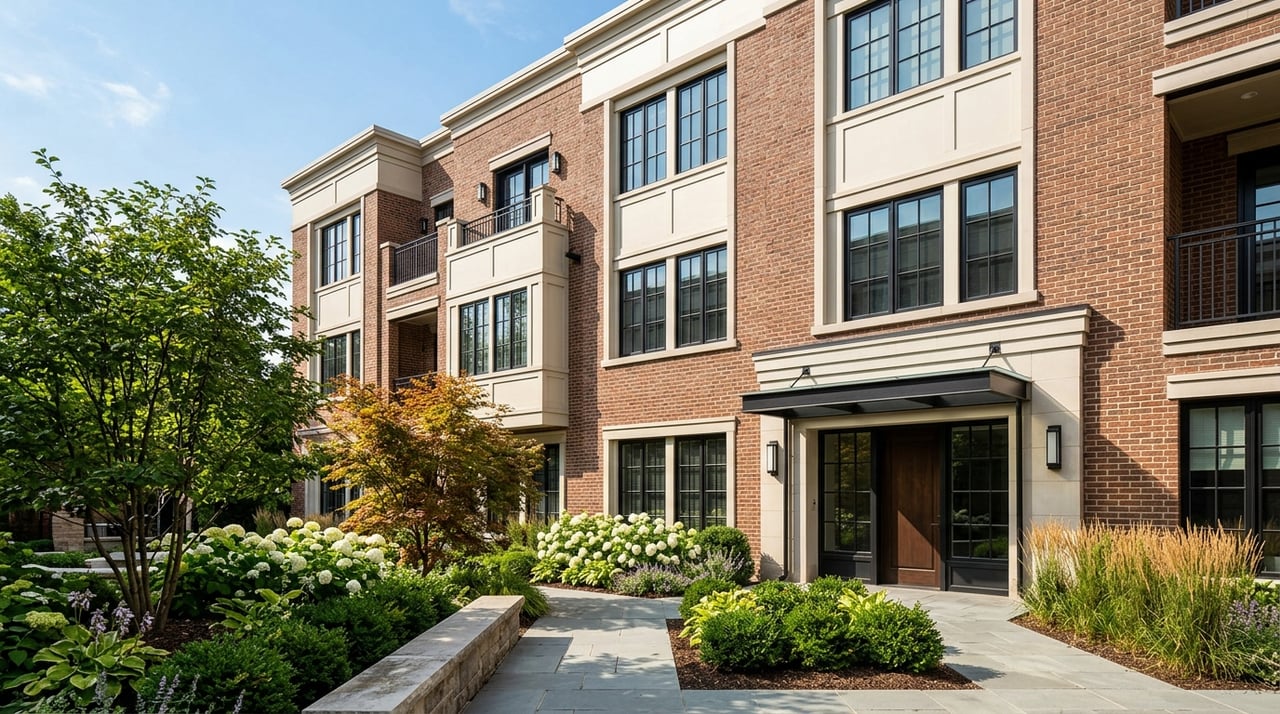
Chestnut Grove is one of the clearest local examples of near-borough condo living. The community says it is within walking distance of downtown and includes both flat and townhome-style condos built around 1981. Unit sizes range from about 880 to 1,547 square feet, and many homes include a patio or balcony.
This type of community can work well if you want a lower-maintenance home and value being close to the borough’s center. It also shows how attached housing in Doylestown can come in different formats, not just stacked condos or large townhomes.
Westwyk overview
Westwyk offers a different version of attached living. According to the association, the community spans 33 acres and most of its 199 homes include three bedrooms, a den, 2.5 baths, a private patio, and one- or two-car attached garages.
Residents there also have access to a community center, swimming pool, wading pool, playground, and open common areas. If you want more living space and more on-site amenities, a community like Westwyk may feel closer to a single-family-home lifestyle, just with shared maintenance built in.
Recent price examples
Recent listing snapshots help show the range. A Doylestown Station townhome sold for $520,000 and offered 3 bedrooms, 4 baths, 1,690 square feet, three levels, a finished lower level, and a two-car attached garage, with a $325 monthly condo or coop fee.
A Chestnut Grove condo sold for $360,000 and offered 2 bedrooms, 1 bath, 1,137 square feet, a private patio, and a $293 monthly HOA fee. Those examples show how much price can shift based on size, layout, garage space, age, and community features.
How fees affect the real cost
One of the biggest questions buyers ask is simple: what does the monthly fee actually cover? In many Doylestown communities, that fee is paying for a bundle of services, not just one line item.
At Westwyk, monthly dues cover water, sewer, landscaping, snow removal, common-area lighting, pool maintenance, insurance, and trash removal. In the Doylestown Station example, the fee covered common-area maintenance, structure maintenance, grounds, snow removal, and trash.
That means you should compare homes based on total monthly cost, not just purchase price. A higher fee may offset bills or maintenance tasks you would otherwise pay for separately in a detached home.
Why rules and documents matter
In Pennsylvania, condo ownership includes shared ownership and association governance over common elements, including their use, maintenance, repair, replacement, and modification. In plain terms, you are not only buying the inside of a home. You are also buying into a structure with rules that can affect how the property is maintained and how common areas are used.
That matters because lifestyle and flexibility can differ from one community to another. For example, Chestnut Grove requires approval for exterior changes such as windows and doors, and its community rules also address parking and vehicle restrictions.
What sellers must provide at resale
Pennsylvania resale rules require the seller to provide the buyer with the declaration, bylaws, rules or regulations, and a certificate with association details before conveyance. This is one reason careful document review is so important when you are buying a condo or townhome.
If you only look at the monthly fee, you can miss details that directly affect your costs and day-to-day use of the property. The full package can give you a clearer picture of ownership responsibilities, restrictions, and financial health.
Reserve funds and extra charges
A Pennsylvania resale certificate can include a statement of the amount, or absence, of a budget reserve for repairs and replacement. That is a key detail, especially in older communities where future capital work may become a larger issue over time.
You should also ask about one-time capital contributions, special assessments, and pending projects. A recent listing example in Chestnut Grove referenced both a capital contribution fee and a special assessment, which is a good reminder that monthly dues are only part of the financial picture.
Condos and townhomes versus single-family homes
Attached living often means trading private yard space and some autonomy for convenience, shared amenities, and lower exterior upkeep. For many buyers, that is a worthwhile trade, especially if walkability or lock-and-leave simplicity is high on the priority list.
In Doylestown, attached homes are also a relatively small part of the market. Redfin reported only 1 condo and 4 townhouses for sale in the borough last month, while Realtor.com showed 123 homes for sale overall. That limited supply can make the best-fit units especially competitive when they hit the market.
Pricing is not always a bargain
It is also important not to assume that attached housing will always be dramatically less expensive than a detached home. Redfin reported a March 2026 median sale price in Doylestown of $581,000, while Realtor.com’s current market snapshot showed a median list price of $820,000.
Those figures are not directly comparable because one reflects closed sales and the other reflects active listings. Still, they help show that Doylestown is a relatively high-priced market, and condos or townhomes may offer value through convenience and location as much as through a lower purchase price.
Who condo and townhome living fits best
In Doylestown, attached homes often suit downsizers, busy professionals, and first-time buyers who care more about convenience than lot size. They can also be a strong fit if you want flexible interior space like a den, loft, or finished lower level for work, guests, or hobbies.
If your goal is a walkable routine, communities near the borough core may stand out the most. Chestnut Grove is within walking distance of downtown, and Westwyk is described as a short stroll to dining, shopping, movies, museums, and the Bucks County Library.
For some buyers, the biggest benefit is lifestyle efficiency. You may give up a larger yard, but gain a home that is easier to manage and closer to the places you enjoy most.
Questions to ask before you buy
Before you commit to a condo or townhome in Doylestown, it helps to look beyond photos and square footage. A smart review can help you avoid surprises later.
Here are a few questions worth asking:
- What does the monthly fee cover, such as water, sewer, trash, snow removal, landscaping, insurance, or amenities?
- Is the property structured as a condo or as a fee-simple townhome?
- What resale documents will you receive, and when?
- Are there reserve funds in place for repairs and replacement?
- Have there been any recent or pending special assessments?
- Is there a one-time capital contribution due at closing?
- How do parking assignments and guest parking work?
- Will you need approval for exterior updates or replacements?
- Do the community amenities and nearby public amenities make up for the smaller private footprint?
A practical way to evaluate communities
When you tour attached homes in Doylestown, try to compare them through three lenses: lifestyle, monthly cost, and governance. Lifestyle covers walkability, amenities, layout, and how much space you truly need. Monthly cost includes both the mortgage and the association fee, plus any one-time or future charges.
Governance is about understanding how the association operates and what that means for your ownership experience. If you review all three together, you can make a much more confident decision and choose a home that supports how you actually want to live.
If you are weighing condos, townhomes, or detached homes in Doylestown, local context makes all the difference. The right fit depends on how you balance convenience, space, fees, and long-term comfort. If you want clear guidance on the options and a practical read on what each community offers, Nick Esser can help you navigate the decision with local insight and responsive buyer support.
FAQs
What is condo living like in Doylestown?
- Condo living in Doylestown often means a smaller private footprint, shared maintenance responsibilities, monthly association fees, and access to a location that may be close to downtown amenities, parks, and public recreation.
What is the difference between a Doylestown condo and townhome?
- In Doylestown, condos and townhomes can overlap in style, but ownership structure and association rules may differ, so you should confirm whether the property is deeded as a condo or another form of ownership and review the resale documents carefully.
What do Doylestown condo HOA fees usually cover?
- Coverage varies by community, but local examples show fees may include items like landscaping, snow removal, trash, water, sewer, insurance, structure maintenance, and amenity upkeep.
Are Doylestown condos and townhomes cheaper than single-family homes?
- Not always, because price can vary significantly based on location, square footage, age, garage space, and amenities, and attached homes in Doylestown are not always dramatically cheaper than detached homes.
What documents should you review when buying a condo in Pennsylvania?
- Pennsylvania resale rules require sellers to provide documents such as the declaration, bylaws, rules or regulations, and a certificate with association details, all of which you should review before closing.
What should you ask about special assessments in a Doylestown condo community?
- You should ask whether there are any current or pending special assessments, whether a capital contribution is due at closing, and what the reserve funding looks like for future repairs and replacement.
Are walkable condo and townhome communities available near downtown Doylestown?
- Yes, local examples such as Chestnut Grove and Westwyk are described as being close to downtown attractions and daily conveniences, which can appeal to buyers seeking a more walkable lifestyle.