If you are drawn to the idea of a farmhouse in Solebury, you are probably looking for more than square footage. You want character, land, and a setting that feels rooted in Bucks County rather than copied from a design trend. This guide will help you understand what gives Solebury farmhouse living its appeal, which upgrades tend to fit the local character, and how the lifestyle comes together day to day. Let’s dive in.
Why Solebury fits farmhouse living
Solebury has the kind of physical setting that helps farmhouse properties feel authentic. According to the township, 3,868 acres have been protected through land preservation efforts, and about 40% of the township’s 17,376 acres has some protection from development. That preservation helps maintain the open-space backdrop that many buyers picture when they think about farmhouse living in this part of Bucks County.
The township also describes Solebury as a mix of small farms, estate lots, comfortable homes, open space, and historic features. That matters because farmhouse buyers are often looking for a blend of privacy, scenery, and lived-in local history. In Solebury, those elements are not staged. They are part of how the township has evolved.
Historic districts add another layer to that appeal. Solebury has six historic districts: Carversville, Center Bridge, Cuttalossa, Lumberville, Phillips Mill, and Upper Aquetong Valley. These areas were settled around crossroads, waterways, and mill sites, which helps explain why the built environment still feels connected to the land.
Upper Aquetong Valley shows the pattern
If you want a clear example of local farmhouse character, Upper Aquetong Valley stands out. The township says it preserves dispersed family farmsteads dating from the 1750s, with 100- to 200-acre lots and building clusters set away from roads. It is described as one of the region’s few intact examples of early farming settlement patterns in southeastern Pennsylvania.
For buyers, that history translates into a setting that often feels quieter and less formal than an estate neighborhood. Homes may sit deeper on the land, and the relationship between house, outbuildings, and fields can feel intentional rather than decorative. That is a big part of what makes a Solebury farmhouse feel local instead of generic.
What Solebury farmhouses look like
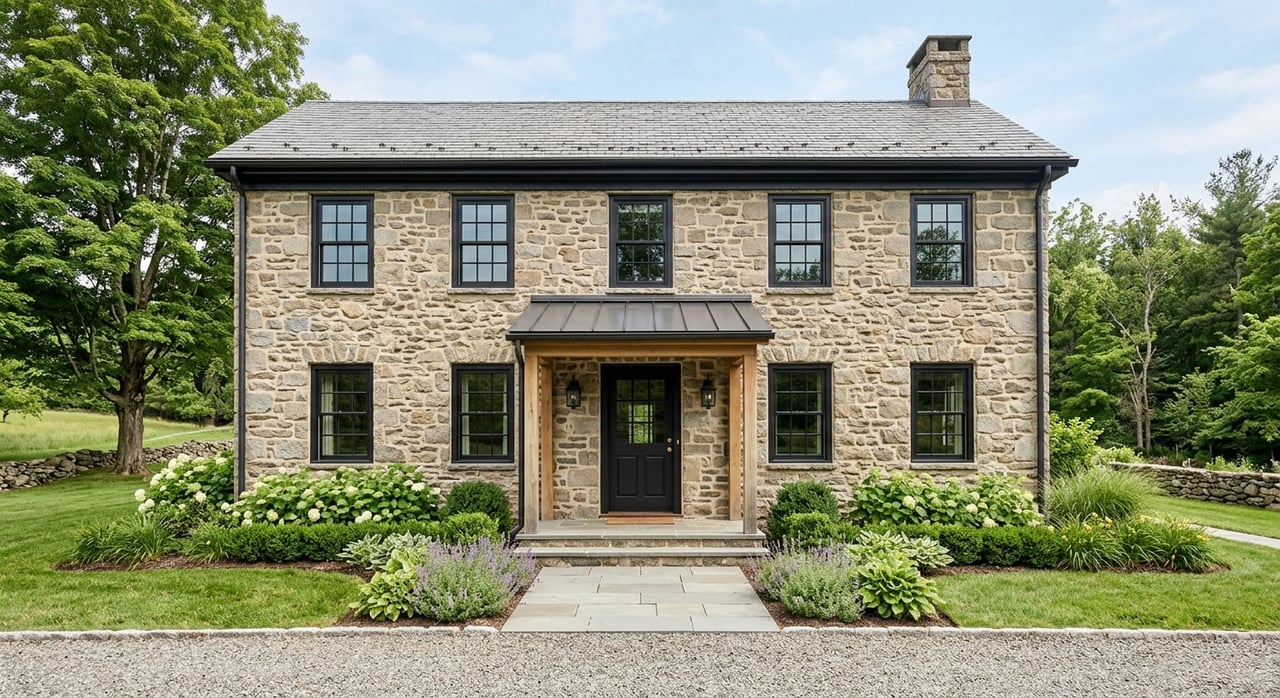
Not every farmhouse in Solebury fits a single style label. The Pennsylvania State Historic Preservation Office notes that many farmhouses are vernacular, meaning they were built for function and adapted over time rather than designed to match a formal architectural style. That practical quality is part of their charm.
Common forms include five-bay center-hall houses, four-over-four layouts, Pennsylvania German double-door farmhouses, and I-houses. Many also gained rear additions as needs changed over time. So when you tour a farmhouse here, you are often seeing a home that grew in phases rather than one that stayed frozen in a single era.
That layered evolution shows up in real local examples. A Solebury house study at 19 Reeder Road documented a stone house built in two major phases, with a rear kitchen wing, evidence of a former cooking fireplace, and a carriage house on the property. In other words, these homes often tell a story through additions, materials, and layout changes.
Outbuildings matter too
A farmhouse property is often about more than the main house. PHMC notes that historic farmsteads may include a farmhouse plus outbuildings, with newer structures added over time beyond the historic core. In this setting, barns, carriage houses, tenant houses, wash houses, wells, and wood sheds are all part of the broader farmstead vocabulary.
For you as a buyer, that means value may come from how the whole property works together. A carriage house, barn, or secondary structure can shape the way a home lives and looks, even if you use that space very differently today. The key is to see the property as a composition, not just a house with extra buildings.
What upgrades tend to work best
When buyers imagine updating a farmhouse, the smartest approach in Solebury is usually compatible improvement, not total reinvention. PHMC defines rehabilitation as making a property usable through repair, alterations, and additions while preserving the historic features that convey its value. That framework fits farmhouse homes especially well.
In practical terms, that often means repairing stone and masonry, preserving key window openings, and making additions that respect the original massing of the home. Sensitive updates to mechanical, electrical, and plumbing systems can also fit within that approach. Roofing and window repair or restoration may also be part of a thoughtful plan.
This matters because farmhouse appeal can disappear quickly when original scale and materials are ignored. The goal is usually to make the house work better for modern living while keeping the pieces that make it feel like Solebury. Buyers tend to respond well when the old and new feel connected rather than in conflict.
Good farmhouse upgrades often include
- Kitchen and bath updates that fit the home’s scale
- Mechanical, electrical, and plumbing improvements
- Masonry repair and stonework maintenance
- Roofing updates that support long-term preservation
- Window repair or restoration where possible
- Additions that respect original massing and layout
- Thoughtful reuse of barns, carriage houses, or other outbuildings
Historic-review rules to know
Not every farmhouse purchase in Solebury comes with the same review requirements. The most important point is whether the property is located in a regulated historic district. In Solebury, the local Historical Architectural Review Board reviews proposed construction and renovation for homes and structures in Carversville and Phillips Mill.
If a home is in one of those districts, exterior changes may require local review for historic compatibility. That does not mean you cannot improve the property. It means the planning process should account for local standards before work begins.
For buyers, this is less about discouragement and more about clarity. If you are considering a farmhouse in one of those areas, it helps to understand early what may be reviewed and how that could shape renovation timing and design decisions. A little preparation can save a lot of frustration later.
The Solebury lifestyle around a farmhouse
Farmhouse living in Solebury is not just about architecture. It is also about how you spend your time once you are home. The township’s parks and recreation resources help explain why so many buyers connect this area with an outdoors-oriented lifestyle.
Aquetong Spring Park offers 48 acres of trails, while Delaware River recreation includes activities like fishing, canoeing, and tubing. The Delaware Canal towpath links Washington Crossing Historic Park to Lumberville and passes through New Hope, creating another easy way to enjoy the landscape. If your ideal weekend includes time outside without leaving the area, Solebury has strong everyday options.
Bowman’s Hill Wildflower Preserve adds even more depth to that picture. Its official resources say the preserve includes more than 700 native plant species and more than 5 miles of trails across 134 acres. That kind of access to nature is part of what gives farmhouse living here a slower, more grounded feel.
Community texture still matters
Even with its rural setting, Solebury does not feel isolated in every pocket. Township community resources describe resident-led events and a community garden in Carversville, which helps explain why some buyers see the area as both country-oriented and community-minded. That mix can be appealing if you want open space without giving up a sense of local connection.
For households considering public schools, the New Hope-Solebury School District serves New Hope Borough and Solebury Township and enrolls 1,245 students. That is a straightforward fact, but an important one if you are comparing locations within central Bucks County. It helps ground the lifestyle decision in day-to-day planning.
How to shop farmhouse homes wisely
If you are searching for a farmhouse in Solebury, it helps to look past surface-level finishes. A stylish kitchen matters, but so do the building’s bones, the setting, and the way updates have been handled over time. A home with character usually rewards close attention.
As you tour properties, focus on a few practical questions:
- Does the home retain original materials or forms that give it local character?
- Have additions been integrated in a way that feels balanced?
- Do outbuildings add usable function or visual appeal?
- Is the property located in Carversville or Phillips Mill, where exterior changes may be reviewed?
- Do the land, views, and approach to the house support the farmhouse lifestyle you want?
For sellers, the same logic applies in reverse. A farmhouse usually benefits from presentation that highlights its setting, texture, and evolution over time. The strongest marketing often explains not just what has been updated, but how those updates respect the home’s original identity.
Why detail matters in buying or selling
Farmhouse properties often need more context than a standard suburban home. Buyers want to understand what feels original, what has changed, and what kind of stewardship the property may need going forward. Sellers benefit when those details are presented clearly and with confidence.
That is where a locally focused, hands-on approach can make a real difference. Whether you are buying a character-rich property or preparing one for market, the process usually works best when presentation, planning, and local knowledge all line up. In a place like Solebury, nuance matters.
If you are thinking about buying or selling a farmhouse in Solebury, working with a local expert can help you evaluate character, setting, and next steps with a clear strategy. Connect with Nick Esser to talk through your goals and what farmhouse living in this area could look like for you.
FAQs
What makes a farmhouse in Solebury feel local?
- Local farmhouse character often includes stone or masonry construction, vernacular layouts, rear additions, and outbuildings such as barns or carriage houses in a preserved farm setting.
Do Solebury farmhouse homes always have historic restrictions?
- No. In Solebury, local historic-review oversight for proposed exterior construction and renovation applies in the regulated historic districts of Carversville and Phillips Mill.
What kinds of upgrades fit a historic farmhouse in Solebury?
- The strongest approach is usually compatible rehabilitation, such as sensitive system upgrades, masonry repair, roofing work, window repair or restoration, and additions that respect the original massing.
What outdoor amenities support farmhouse living in Solebury?
- Solebury offers Aquetong Spring Park, Delaware River recreation, access to the Delaware Canal towpath, and nearby Bowman’s Hill Wildflower Preserve with more than 5 miles of trails.
What public school district serves Solebury Township?
- The New Hope-Solebury School District serves Solebury Township and New Hope Borough, and the district reports an enrollment of 1,245 students.